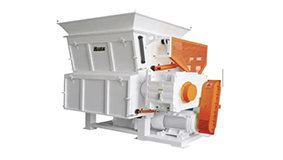
A single shaft shredder is an industrial size-reduction machine that uses one slow-speed rotor, cutting knives, a hydraulic pusher and a sizing screen to convert bulky waste into controlled pieces for washing, separation, extrusion or pelletizing. Unlike a high-speed crusher, it grips difficult material and reduces it under high torque. It is widely used in plastics recycling plants and extrusion factories handling lumps, pipes, profiles, film bales, pallets and production scrap.
How Does a Single Shaft Shredder Work?
A single shaft shredder works by pushing material against a rotating knife rotor and cutting it repeatedly until the pieces pass through a screen. Material enters the hopper, and a hydraulic pusher moves it toward the rotor. Rotor knives cut against stationary counter-knives, while the screen controls discharge size. Oversized pieces remain in the chamber for another cutting cycle. Rotor speed is normally much lower than that of a granulator. JWELL's DYSSJ-850 and DYSSJ-1500 models, for example, operate at 37 rpm with 37 kW and 75 kW main motors. Their maximum crushing chambers are 700 × 730 mm and 800 × 1,290 mm. These figures show why capacity must be matched to feed size and density rather than motor power alone. A complete system may connect the single shaft shredder machine with conveyors, metal separation, washing, drying and pelletizing equipment.
What Materials and Applications Suit a Single Shaft Shredder?
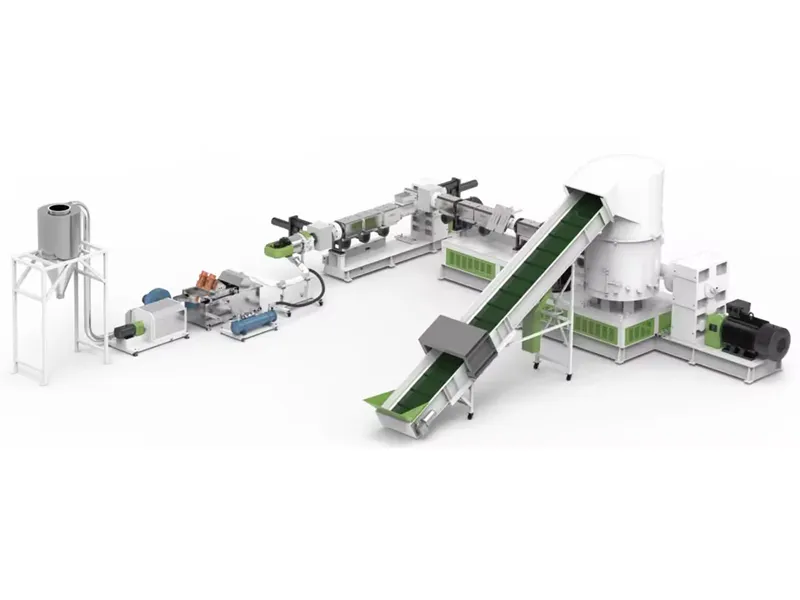
Single shaft shredder applications are processes that require stable feeding and a relatively uniform output size from bulky or irregular waste. Typical materials include PE and PP lumps, plastic drums, purgings, film rolls, woven bags, profiles, pallets, wood-plastic composites and rejected molded parts. Long pipes or very thick products may require a specialized feeding system or a combined shredder-and-crusher unit. The machine is often installed before a recycling and pelletizing line. Shredding reduces material volume and creates manageable feed for washing or granulation. In PET recycling projects, the size-reduced material may then enter a plastic bottle washing line for cleaning and preparation before further processing.
The U.S. Environmental Protection Agency reports that plastics accounted for 35.7 million tons, or 12.2%, of U.S. municipal solid waste generation in 2018. This figure illustrates the scale of the material-management challenge addressed by industrial recycling systems. Feed contamination must be checked before processing. Metal, stones and other hard objects can damage knives, screens and bearings, making inspection, magnetic separation and overload protection essential.
Single Shaft vs Double Shaft Shredder vs Crusher
Shredder comparison is the process of matching the cutting principle and discharge control to the feed material, required particle size and next production stage.
| Equipment | Best Suited To | Output Control | Typical Role |
|---|
| Single shaft shredder | Lumps, profiles, pallets, film bales and production scrap | High, due to the sizing screen | Controlled primary shredding |
| Double shaft shredder | Bulky, hollow, mixed or difficult waste | Lower and usually coarser | Volume reduction and pre-shredding |
| High-speed crusher | Smaller, clean and pre-sized rigid plastics | Fine output with a screen | Secondary size reduction |
A double shaft plastic shredder is often preferable when aggressive gripping and coarse reduction matter more than uniform particle size. A crusher is more suitable when clean feed is already small enough for high-speed cutting. Some recycling plants use a shredder first and a crusher second. Selection should consider material type, maximum dimensions, bulk density, contamination, target particle size, hourly demand and downstream equipment. Buyers should also compare rotor design, knife material, screen access, pusher control, automatic reversing, dust extraction, electrical standards and spare-parts support. When recycled polymer must be blended with fillers, stabilizers, pigments or reinforcing materials, a compounding machine can be incorporated into the downstream production process after sorting, cleaning and size reduction.
Safety is part of machine selection. OSHA’s machine-guarding requirements address hazards associated with rotating parts, nip points and flying material. The UK Health and Safety Executive also provides practical guidance on machinery safety in waste and recycling, including the use of fixed guards and measures that prevent access to moving parts on shredders, conveyors and related processing equipment. Maintenance should also follow applicable requirements so electrical, hydraulic and mechanical energy is isolated before service.
Conclusion
Single shaft shredder selection means choosing a size-reduction solution around the actual feed material and downstream process, rather than simply buying the machine with the largest motor. Before requesting a quotation, provide JWELL with material photos, composition, maximum dimensions, bulk density, contamination level, target output size, required capacity and final recycling process. JWELL can then evaluate the hopper, rotor, knives, screen, pusher and control system as one coordinated solution.
FAQ
1. What is the main advantage of a single shaft shredder?
Its sizing screen provides a more controlled discharge than many coarse double-shaft systems, supporting downstream washing, crushing or pelletizing.
2. Can a single shaft shredder process plastic film?
Yes. Film rolls, bales and woven materials can be processed when the rotor, hopper and pusher are designed to limit wrapping and unstable feeding.
3. What determines shredder capacity?
Capacity depends on material type, bulk density, dimensions, moisture, contamination, target size, rotor design, screen opening and motor load.
4. How often should shredder knives be replaced?
There is no universal interval. Knife life depends on feed abrasiveness, contaminants, operating hours, knife material and maintenance. Regular inspection is more reliable than a fixed schedule.
5. Does a shredder replace a plastic crusher?
Not always. A shredder handles bulky feed at low speed and high torque, while a crusher usually produces finer particles from smaller and cleaner material.
6. What information is needed for a shredder quotation?
Provide material photos, maximum feed size, bulk density, expected throughput, target particle size, operating hours, local voltage and downstream process.
References
United States Environmental Protection Agency (EPA). Plastics: Material-Specific Data. Official data on plastic waste generation, recycling, combustion with energy recovery and landfill disposal.
Health and Safety Executive (HSE). Machinery Safety in Waste and Recycling. Practical guidance on guarding, access control and safe operation for shredders, conveyors and other machinery used in waste and recycling facilities.
 English