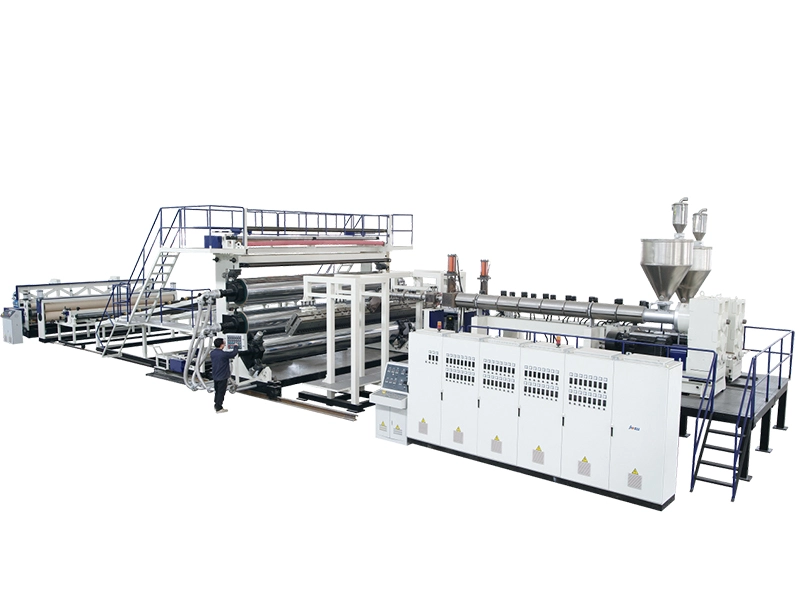
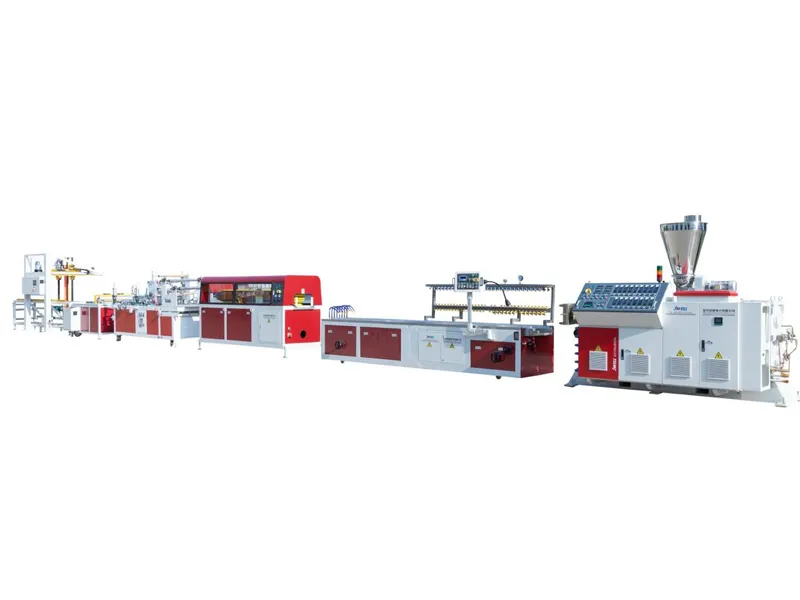
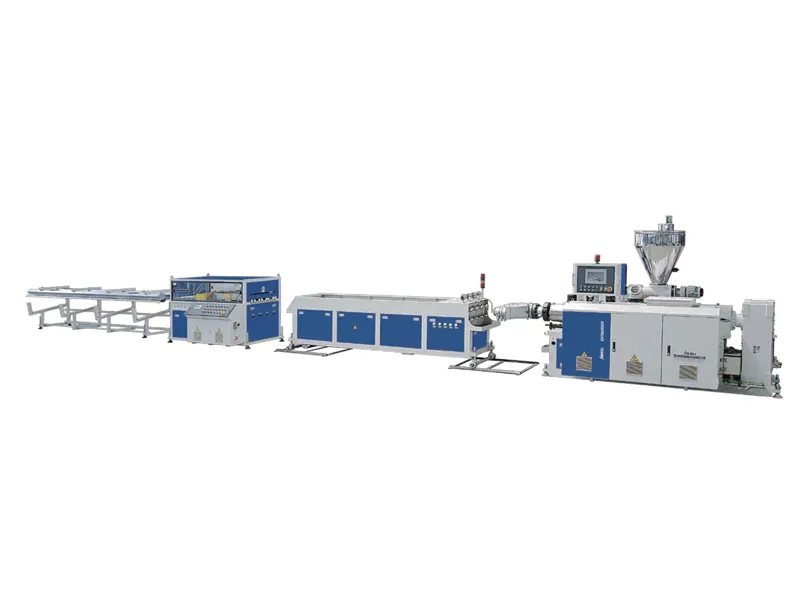
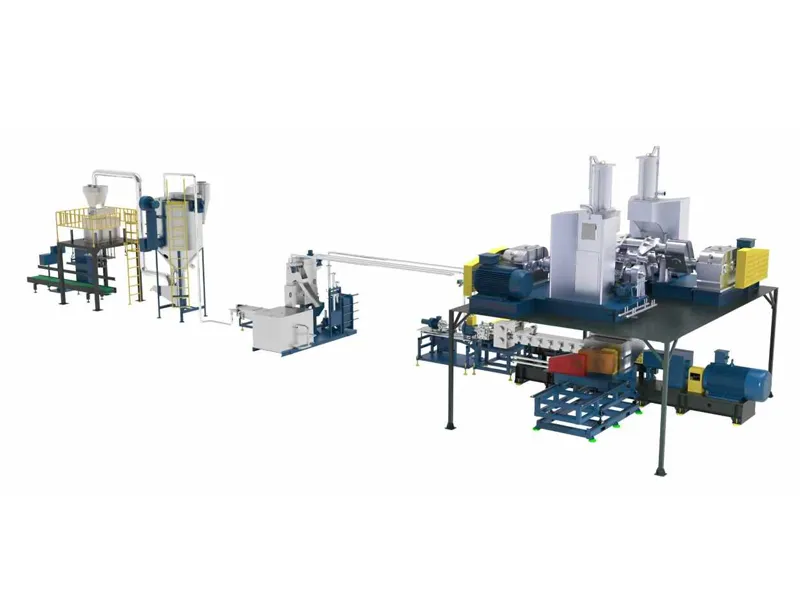
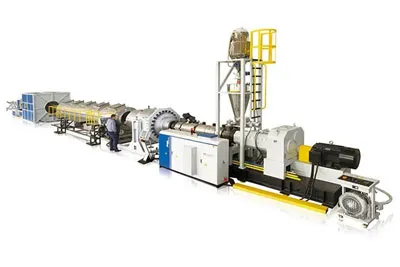
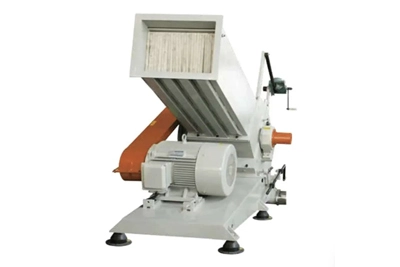
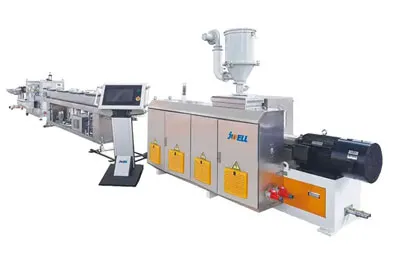
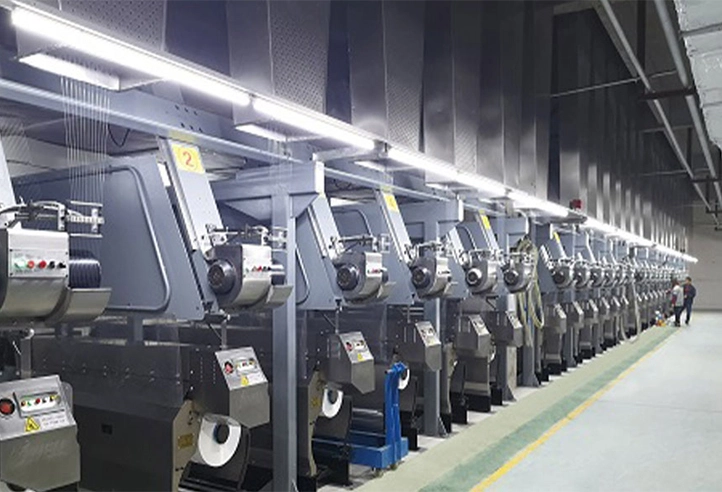
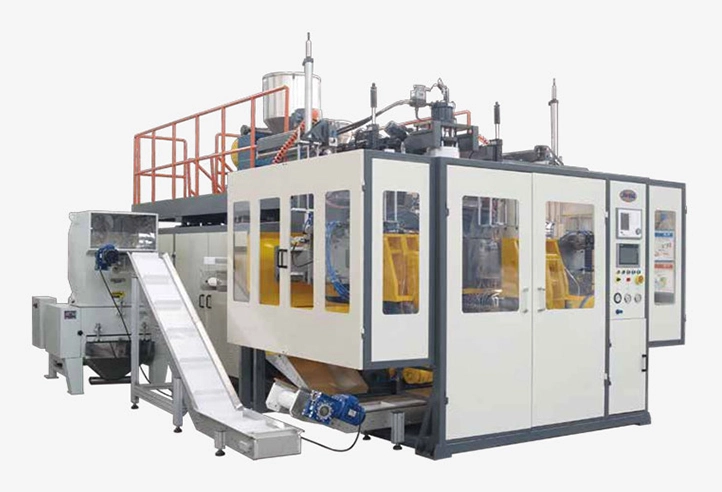
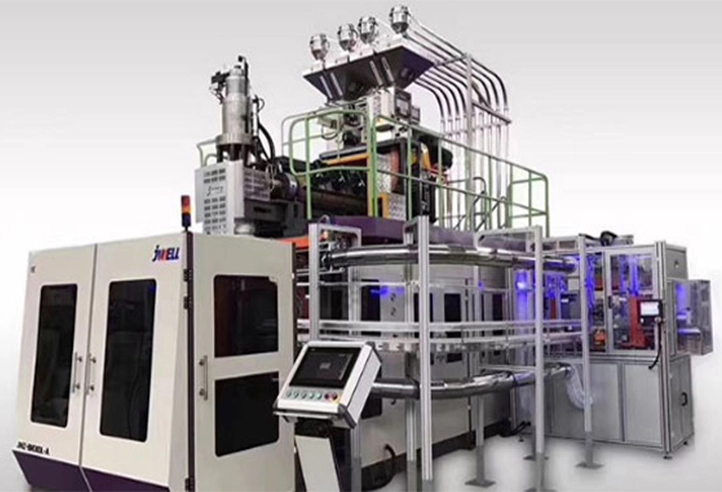
PET sheet extrusion line vs PC sheet extrusion line is a practical comparison for manufacturers producing packaging sheets, thermoforming sheets, optical plates, lighting panels, construction sheets or protective plastic boards. Both lines melt polymer, form the melt through a flat die, calibrate sheet thickness with rollers and cool the sheet for cutting or winding, but PET and PC require different process control, drying strategy, die design and downstream configuration. JWELL provides Sheet/Plate/Film Extrusion Line solutions covering PET, PC, PMMA, GPPS, PVC, PP and PS materials. JWELL’s PET and PC sheet extrusion equipment is designed for different product applications, from PET thermoforming packaging to PC solid sheet, optical sheet and industrial protective panels.
What Is a PET Sheet Extrusion Line?
A PET sheet extrusion line is a production system used to convert PET resin, APET, PETG, PLA or recycled PET material into flat sheet for thermoforming, blister packaging, folding boxes and antistatic packaging. PET is widely used for packaging because it combines transparency, toughness, chemical resistance and recyclability. According to Wikipedia’s overview of polyethylene terephthalate, PET has a density of approximately 1.38 g/cm³ at 20°C, although the exact value can vary with material structure and grade. This density is useful when estimating sheet weight, raw-material consumption, production output and unit cost.
JWELL’s PET sheet extrusion line uses a degassing system and is described as a crystallization-free and drying-free exhaust PET sheet unit. Listed PET line specifications include production thickness of 0.15–1.5 mm and capacities such as 500 kg/h, 750 kg/h and 800–1000 kg/h, depending on model configuration.
What Is a PC Sheet Extrusion Line?
A PC sheet extrusion line is a production system used to process polycarbonate resin into solid sheet, endurance board, optical sheet, light-diffusion sheet, protective panels and building glazing materials. PC is selected when the final sheet needs high impact resistance, dimensional stability, optical clarity, heat resistance and mechanical strength. According to Wikipedia’s polycarbonate material data, polycarbonate has a glass-transition temperature of approximately 147°C. Its heat-deflection temperature is listed at about 128–138°C under a load of 1.8 MPa and approximately 140°C under a load of 0.45 MPa. These thermal properties help explain why PC is used for demanding optical, protective and structural sheet applications.
JWELL’s PC sheet extrusion line covers PC, PMMA and GPPS sheet production. Listed configurations include 1.5–10 mm production thickness, product width options such as 2200 mm and 1400 mm, and output options such as 1500 kg/h and 450 kg/h.
PET Sheet Extrusion Line vs PC Sheet Extrusion Line Comparison Table
PET and PC sheet extrusion lines should be compared by material behavior, sheet thickness, target application, output demand, temperature control and downstream processing requirements.
| Comparison Item | PET Sheet Extrusion Line | PC Sheet Extrusion Line |
|---|
| Main Material | APET, PETG, CPET, PLA, rPET | PC, PMMA, GPPS, PC/PMMA composite |
| Typical Product | Thermoforming sheet, blister sheet, folding box sheet | Solid sheet, optical sheet, endurance board, protective panel |
| Common Thickness | JWELL PET line: 0.15–1.5 mm | JWELL PC line: 1.5–10 mm |
| Output Example | 500–1000 kg/h depending on model | 450–1500 kg/h depending on model |
| Process Focus | Degassing, cooling efficiency, transparency, toughness | Melt stability, optical quality, thickness control, calendering |
| Material Sensitivity | Moisture and IV retention are important | Moisture, thermal stability and optical defects are important |
| Best Market | Packaging, printing, cards, fruit/tool trays, electronic packaging | Construction, automotive, lighting, display, guards, protective covers |
| Buyer Priority | High output, thin sheet uniformity, thermoforming quality | Surface quality, impact resistance, optical performance, wide/thick sheet stability |
A general plastic extrusion process guide explains extrusion as a continuous process where polymer material is melted and formed through a die. This basic principle applies to each plastic plate extrusion line, although the screw configuration, die system, roller calibration and cooling arrangement must be matched to the selected polymer. In sheet extrusion, the difference between PET and PC lies less in the basic extrusion concept and more in material-specific process control.
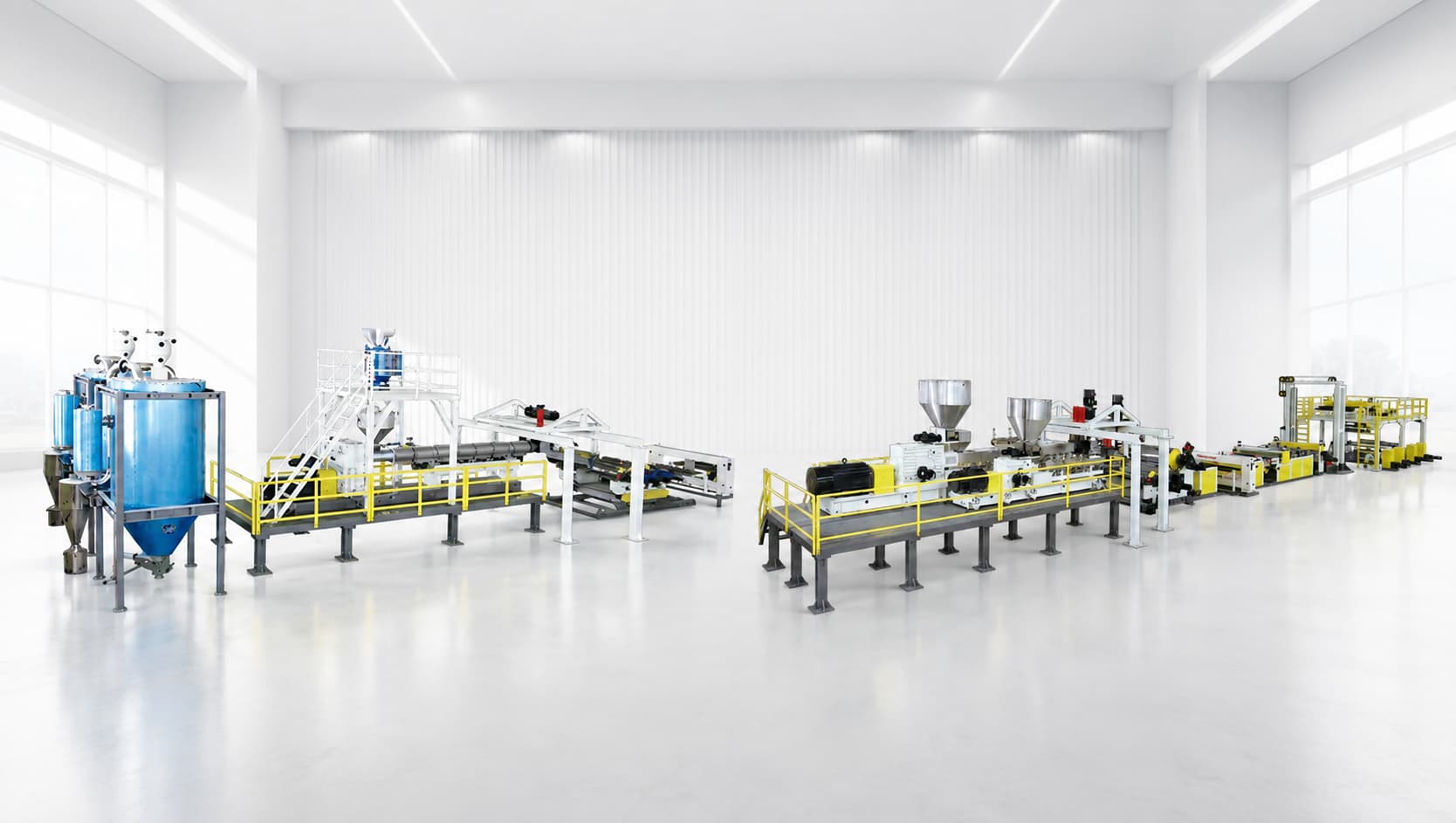
How to Choose Between PET and PC Sheet Extrusion Equipment
Choosing between a PET sheet extrusion line and a PC sheet extrusion line means matching the production line to product thickness, market application, resin behavior, sheet quality target and investment plan.
Choose PET sheet extrusion equipment when the business focuses on thin packaging sheet, thermoforming sheet, transparent trays, folding boxes, printing sheet or antistatic electronics packaging. PET lines should be evaluated by degassing capability, screw design, roller cooling efficiency, thickness uniformity, winding quality and compatibility with virgin or recycled PET.
Choose PC sheet extrusion equipment when the product requires impact resistance, high transparency, weather resistance, heat resistance or thicker rigid sheet. PC lines should be evaluated by drying system, melt pump precision, die design, calender roll accuracy, surface quality, temperature control and downstream cutting or protective film lamination. For lightweight roofing, partitions, sun panels and other multiwall products, a pc hollow sheet extrusion line may be more appropriate than a solid-sheet configuration.
JWELL also provides PC/PMMA/GPPS Optical Sheet Production Line equipment for optical and diffusion sheet applications. This line includes precise melt pump systems and optical sheet configurations, with listed thickness ranges such as 0.125–1.2 mm and 0.175–20 mm depending on product type.
Conclusion
PET sheet extrusion lines and PC sheet extrusion lines are both important plastic sheet production systems, but they are designed for different materials and markets. PET lines are better for packaging, thermoforming and thin transparent sheet production. PC lines are better for impact-resistant, heat-resistant, optical and structural sheet applications. For buyers, the correct decision should start with the final product: sheet thickness, width, application, transparency requirement, output target, resin source and downstream processing method. JWELL supports manufacturers with PET sheet extrusion lines, PC sheet extrusion lines, optical sheet production lines and complete sheet/plate/film extrusion solutions for packaging, construction, automotive, electronics and industrial applications.
FAQ
1. What is the main difference between PET and PC sheet extrusion lines?
The main difference is material processing and product application. PET lines are usually optimized for thin thermoforming and packaging sheets, while PC lines are optimized for thicker, impact-resistant and optical-quality sheets.
2. Can one extrusion line produce both PET and PC sheets?
It is usually not recommended as a standard setup. PET and PC require different drying, temperature control, screw design, die behavior and downstream settings, so dedicated line configuration is safer.
3. Which line is better for food packaging sheet?
A PET sheet extrusion line is generally better for transparent thermoforming packaging, blister trays, folding boxes and food packaging sheet applications.
4. Which line is better for construction or protective panels?
A PC sheet extrusion line is usually better for construction glazing, endurance boards, protective covers, sound barriers and impact-resistant panels.
5. What specifications should buyers provide before quotation?
Buyers should provide material type, sheet width, thickness range, target output, sheet application, layer structure, transparency requirement, recycled material ratio and cutting or winding method.
6. Why choose JWELL for PET or PC sheet extrusion lines?
JWELL provides PET sheet extrusion lines, PC sheet extrusion lines, optical sheet production lines and complete sheet/plate/film extrusion equipment, helping manufacturers match machine configuration to real material and product requirements.
 English