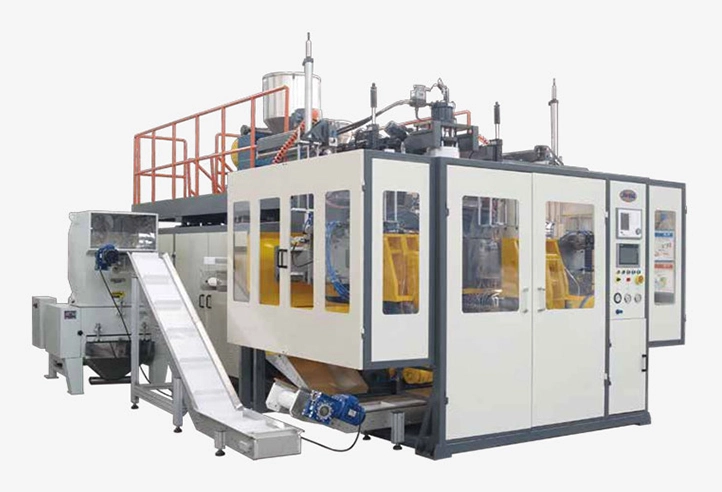
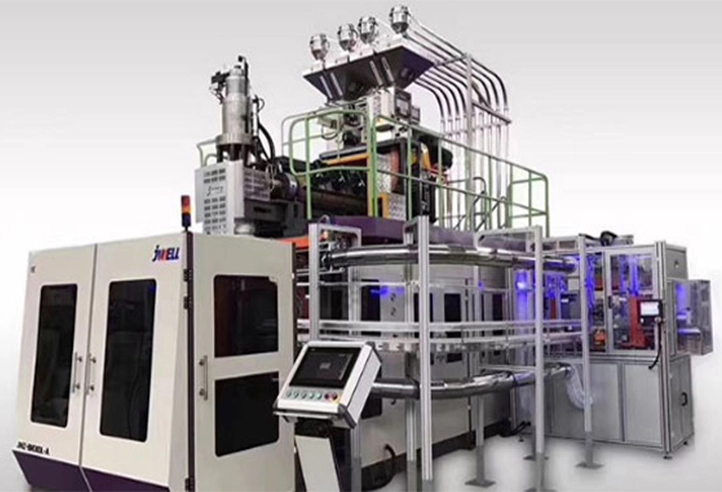
Plastic extrusion is a continuous manufacturing process that melts thermoplastic resin, pushes it through a shaped die, and cools it into a product with a consistent cross-section. It is used for pipes, profiles, sheets, films, cable coatings and technical components because it supports repeatable dimensions and scalable output. Selecting a system involves more than choosing an extruder. Resin behavior, screw design, die geometry, cooling, downstream speed, automation and quality control must operate as one coordinated line.
How Does the Plastic Extrusion Process Work?
The plastic extrusion process is the controlled conversion of pellets, powder or prepared regrind into a continuous shaped product.
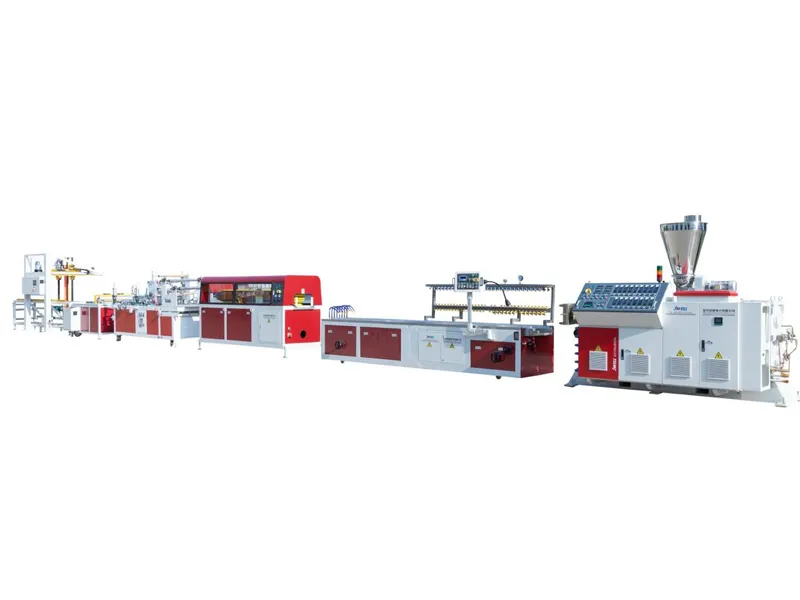
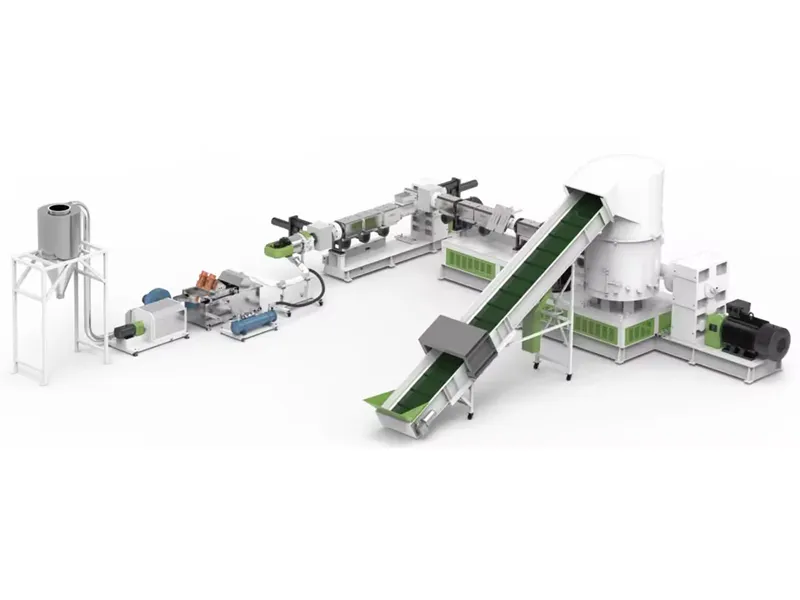
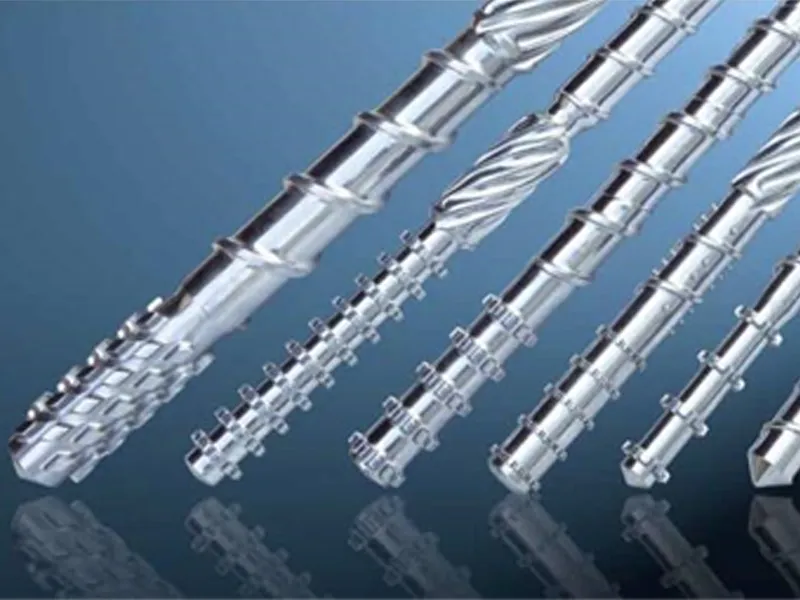
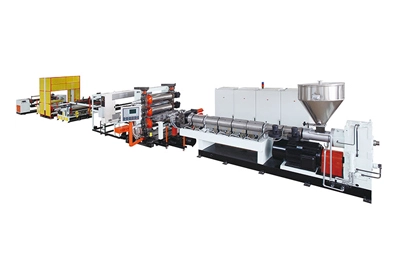
Material enters a hopper and moves through a heated barrel. A rotating screw conveys, compresses, melts and mixes the resin before it passes through filtration and enters the die. Calibration, cooling, haul-off, cutting or winding equipment then stabilizes and finishes the product. A complete line may include feeding and drying equipment, a single- or twin-screw extruder, screen changer, die, vacuum calibration, cooling tanks or rolls, haul-off, cutter, stacker or winder, and PLC controls. The arrangement changes according to the product. For continuous sections such as window frames, sealing strips and cable channels, a plastic profile extrusion machine typically combines a shaped die with calibration, cooling and controlled haul-off equipment. Stable production depends on melt temperature, screw speed, pressure, cooling and line speed. Machine guarding and lockout procedures should also be included; the OSHA plastics industry standards identify relevant safety guidance for extrusion-related equipment.
Which Materials and Products Are Suitable for Extrusion?
Extrusion materials are thermoplastics that can be softened, shaped continuously and solidified without curing in a closed mold.
| Material | Main Advantages | Typical Products | Main Processing Concern |
|---|
| PE/HDPE | Tough, moisture- and chemical-resistant | Pipe, film, geomembrane | Cooling and dimensional stability |
| PP | Low density and chemical resistance | Sheet, packaging, profiles, pipe | Shrinkage and temperature |
| PVC | Rigid or flexible; cost-effective | Pipe, profiles, panels, ducts | Heat sensitivity |
| PET | Clear, strong and good barrier | Packaging and thermoforming sheet | Drying and moisture |
| PC/PMMA | Optical and surface performance | Optical sheet and glazing | Drying and melt control |
| TPU/TPE | Flexible and abrasion-resistant | Film, seals and hoses | Melt stability |
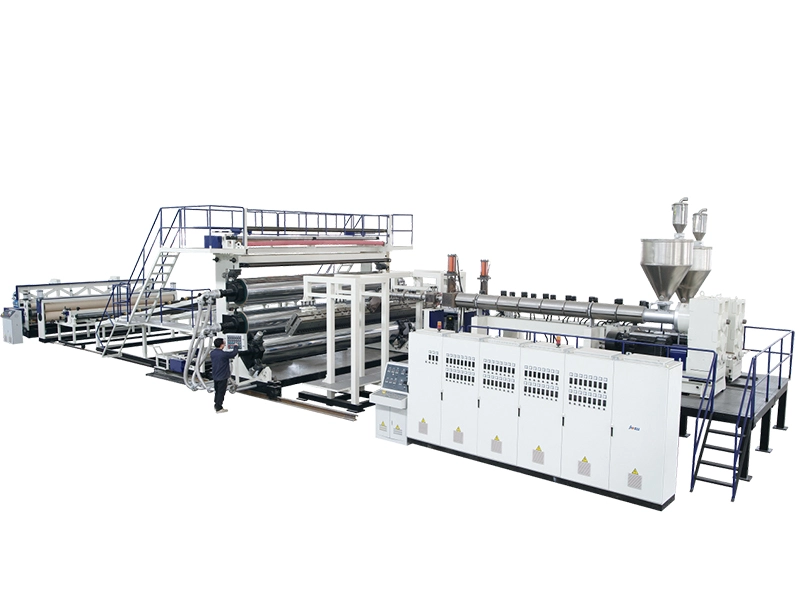
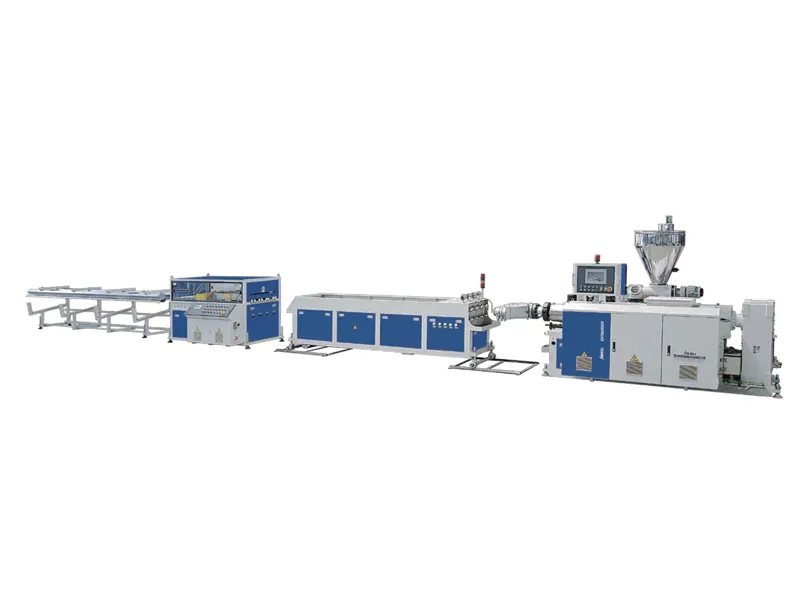
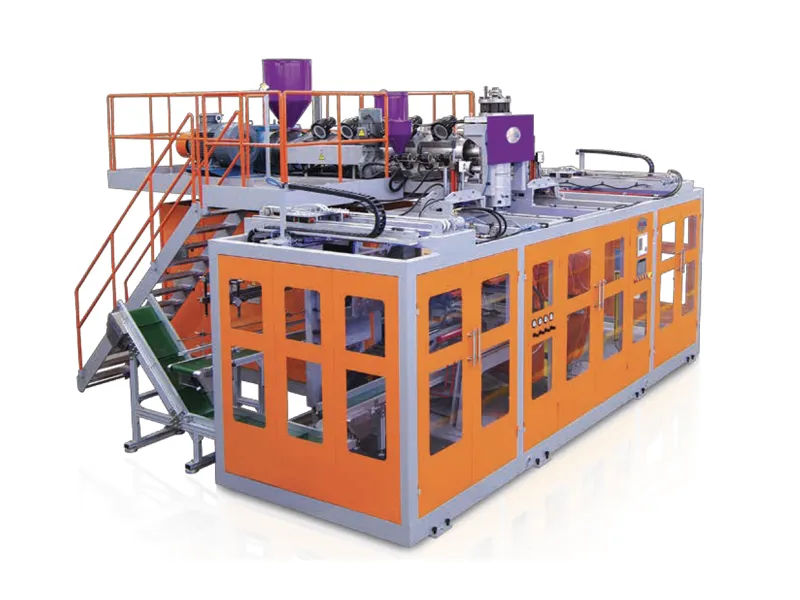
Product design determines the downstream equipment. Sheet, plate and film extrusion lines use flat dies and rolls, while plastic pipe extrusion lines require sizing, vacuum calibration and cooling tanks. For transparent or impact-resistant polycarbonate products, a PC sheet extrusion line also requires accurate melt-temperature control and roll calibration to maintain consistent thickness and surface quality. Material efficiency also matters. The U.S. EPA plastics data reports that 35.68 million tons of plastics entered U.S. municipal solid waste in 2018, highlighting the value of scrap recovery and suitable recycling pathways.
How Should Buyers Select a Plastic Extrusion Line?
Plastic extrusion line selection is the process of matching product specifications, material behavior and output targets to a complete machine configuration. Start with the finished product: resin grade, width or diameter, thickness, layers, tolerance, surface quality, annual volume and applicable standard. Required hourly output should be calculated from annual demand, operating days, shifts and realistic utilization—not nameplate capacity alone.
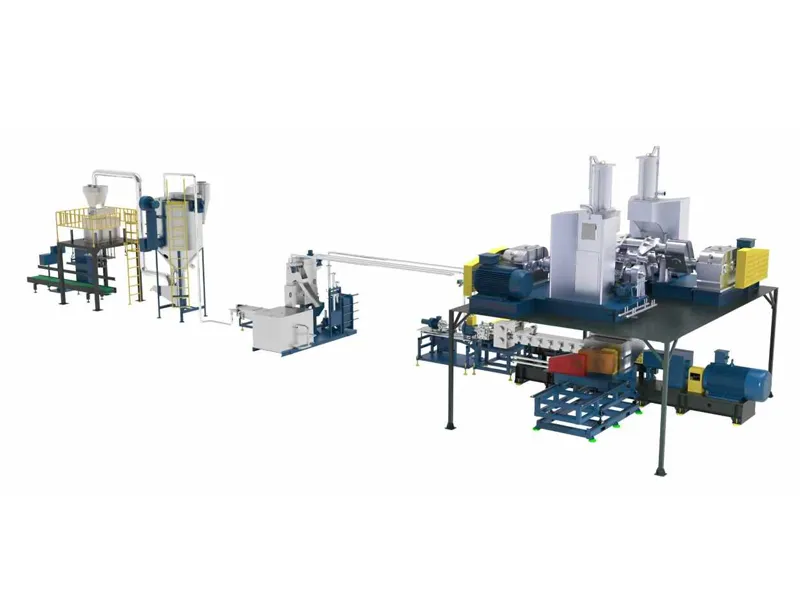
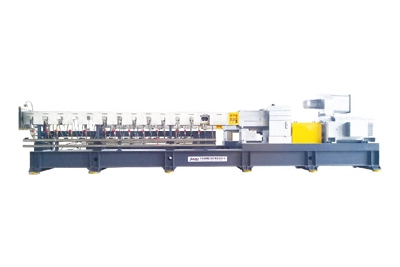
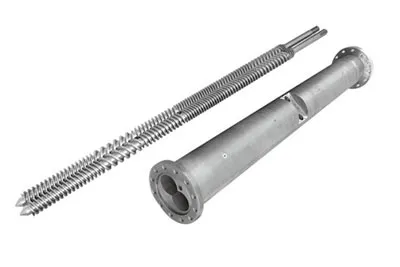
Single-screw extruders usually suit stable melting and conveying. Twin-screw systems are preferred for intensive mixing, filling, reinforcement, devolatilization or reactive compounding. Coextrusion creates functional layers but requires accurate melt distribution and synchronized control. Output must be considered with quality. JWELL lists sheet projects at about 800–1,200 kg/h, while selected PVC profile models range from about 80 to 500 kg/h. Actual capacity depends on resin, dimensions, formulation and quality limits. Buyers should also confirm energy monitoring, changeover time, spare parts, training, remote support and acceptance-test conditions. Tensile testing may follow ISO 527-2. JWELL configures complete plastic extrusion machinery around the required product and downstream process, allowing customers to compare total line performance rather than the extruder alone.
Conclusion
A successful plastic extrusion project is a matched system in which material preparation, extrusion, die design, cooling, downstream handling and controls operate at a stable rate. Before requesting a quotation, prepare a drawing, resin specification, output target, tolerance, utilities, factory layout and quality standard. These details help JWELL engineers recommend a practical configuration and reduce changes after installation.
FAQ
1. What products can be made by plastic extrusion?
Extrusion produces pipe, tubing, profiles, sheets, films, cable insulation, seals, panels and filaments.
2. How is extrusion different from injection molding?
Extrusion continuously forms a constant cross-section. Injection molding fills a closed mold to produce separate three-dimensional parts.
3. Is a single-screw or twin-screw extruder better?
Neither is universally better. Single-screw machines suit stable melting, while twin-screw machines provide stronger mixing, compounding and devolatilization. For heat-sensitive PVC formulations, a PVC twin screw extruder can be configured for controlled conveying, mixing and plastification under suitable processing conditions.
4. What causes unstable extrusion output?
Typical causes include inconsistent feeding, moisture, screw wear, poor temperature control, pressure variation, blocked filtration and mismatched downstream speed.
5. Can recycled plastic be used in extrusion?
Yes, when contamination, moisture, degradation and melt consistency are controlled. The usable percentage depends on the product, resin and regulations.
6. What information is needed for a quotation?
Provide the material, drawing, dimensions, tolerance, layer structure, target output, power supply, factory space, quality standard and automation level.
References
United States Environmental Protection Agency (EPA). Plastics: Material-Specific Data. Data on plastic generation, recycling, combustion and landfill disposal.
International Organization for Standardization (ISO). ISO 527-2:2025 — Plastics: Determination of Tensile Properties. Test conditions for determining the tensile properties of moulding and extrusion plastics.
 English