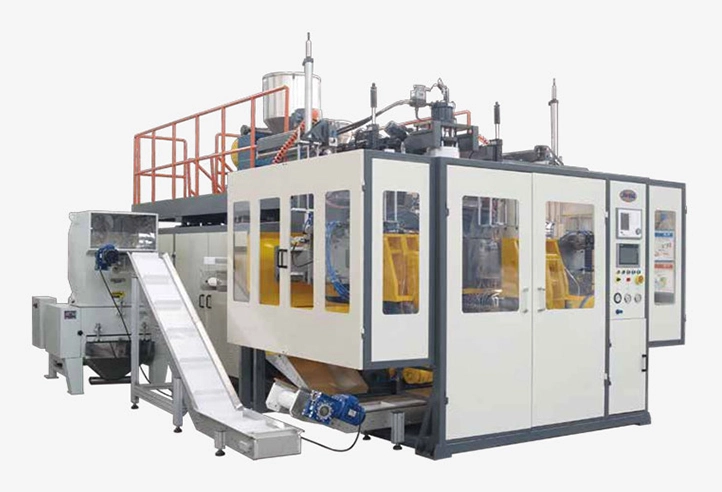
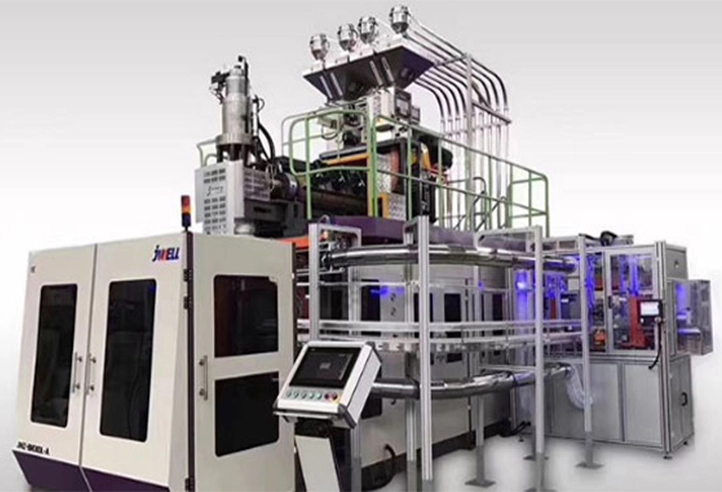
Plastic extrusion is a continuous manufacturing process that converts thermoplastic resin into products with a consistent cross-sectional shape. The basic principle is simple: plastic pellets are fed into an extruder, melted and mixed by a rotating screw, pushed through a die, then cooled and cut or wound into the final product.
For manufacturers, understanding how the process works is important because screw design, temperature, die geometry, cooling and downstream equipment directly affect output, dimensional accuracy and product quality. JWELL provides a broad range of plastic extrusion machinery for sheet, film, pipe, profile, compounding and other applications.
What Is Plastic Extrusion and How Does It Work?
Plastic extrusion is a continuous process in which thermoplastic material is melted, conveyed by a rotating screw and formed through a die into a continuous product.
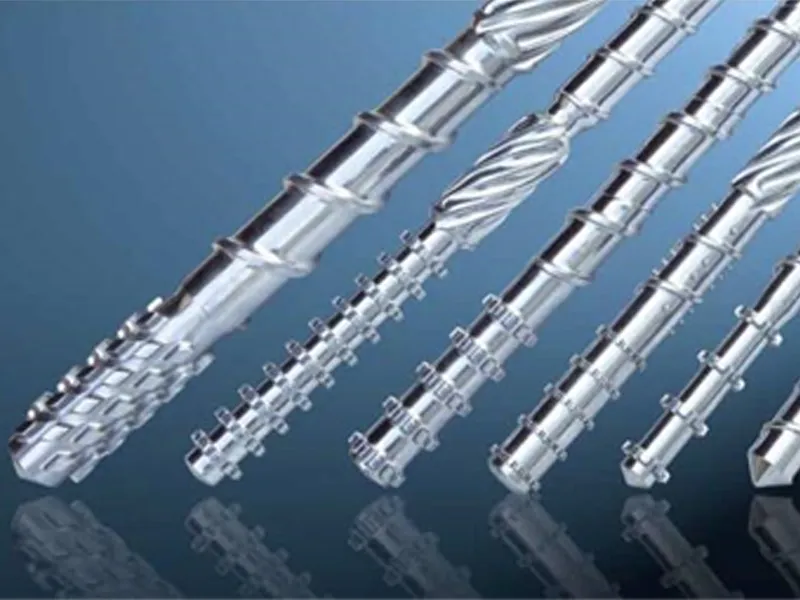
The process begins when plastic pellets or other feedstock enter the hopper. A motor rotates the screw inside a heated barrel, transporting the material forward while heat and mechanical shear gradually plasticize it. According to the TWI guidance on plastic extrusion, extrusion systems commonly use multiple temperature-control zones, allowing the polymer to be heated progressively before forming.
After melting and homogenization, the polymer passes through a screen pack or melt filtration system and reaches the die. The die determines the shape of the extrudate. Depending on the application, the output may become pipe, sheet, film, profile, filament or another continuous plastic product.
A typical extrusion sequence is:
Feeding → Conveying → Melting → Mixing → Filtration → Die Forming → Cooling → Haul-Off → Cutting/Winding
The key point is that extrusion is not simply a melting process. Stable production requires coordinated control of material temperature, screw speed, melt pressure, die design and downstream cooling.
What Are the Main Steps in the Plastic Extrusion Process?
The plastic extrusion process consists of several controlled stages that transform solid polymer pellets into a dimensionally stable finished product.
1. Feeding and conveying
Plastic pellets are loaded into the hopper and enter the feed throat. The screw then transports the material through the barrel. Feed consistency is important because unstable feeding can cause fluctuations in melt pressure, output and product thickness.
2. Melting and plasticization
As the screw rotates, the polymer is exposed to barrel heating and mechanical shear. The material gradually changes from solid pellets into a homogeneous melt.
Different polymers require different processing conditions. PVC, PE, PP, PET, TPU and engineering plastics can have significantly different melting behavior, viscosity and thermal sensitivity.
3. Mixing and melt homogenization
The screw must produce a uniform melt before the material reaches the die. For applications involving additives, fillers, pigments or recycled materials, screw configuration becomes particularly important.
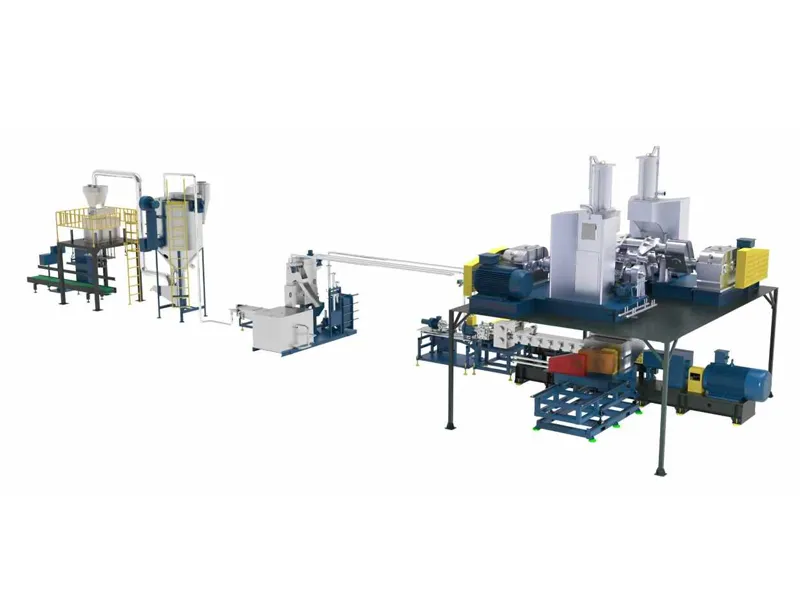
For demanding compounding applications, JWELL also provides masterbatch extruder and twin-screw extrusion solutions designed for material modification and mixing.
4. Die forming
The molten polymer is forced through the die opening. Die geometry determines the basic cross-sectional shape, while die design and melt distribution influence thickness uniformity and dimensional stability.
5. Cooling and sizing
The hot extrudate must be cooled and stabilized. Pipes and profiles commonly use vacuum calibration and cooling tanks, while sheet and film lines may use chill rolls or other controlled cooling systems.
6. Haul-off and finishing
Downstream equipment pulls the material at a controlled speed. Depending on the product, the final stage may involve cutting, stacking, winding, trimming or pelletizing.
What Equipment Is Used in Plastic Extrusion?
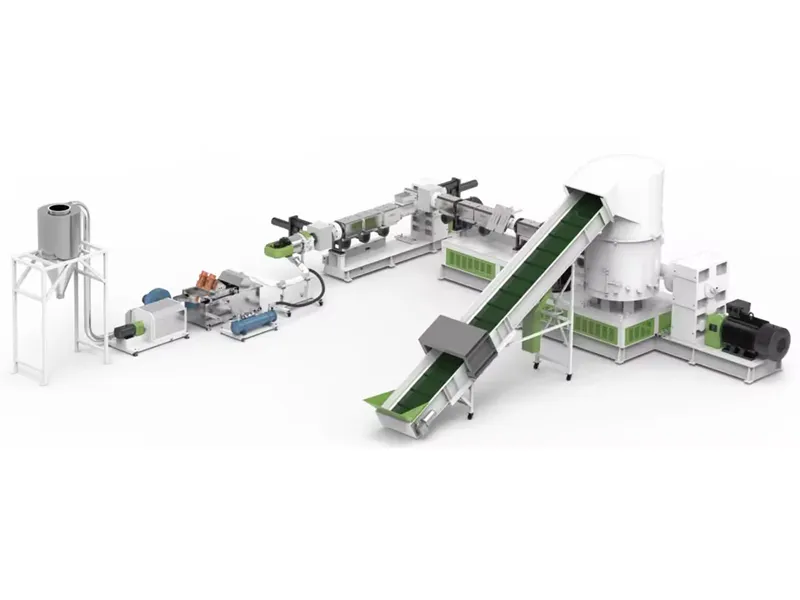
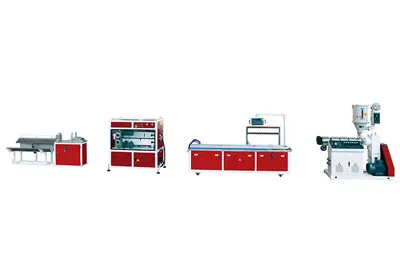
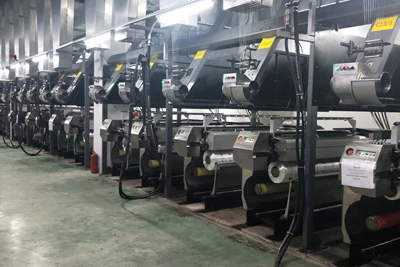
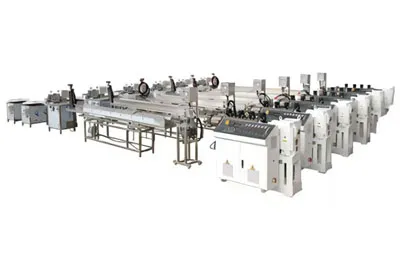
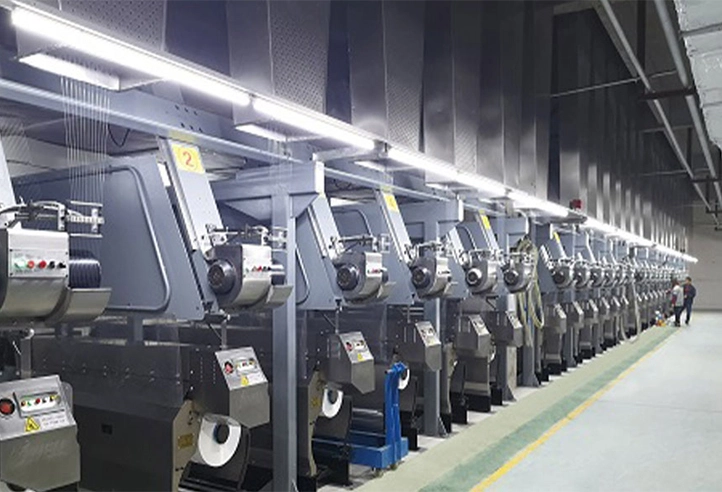
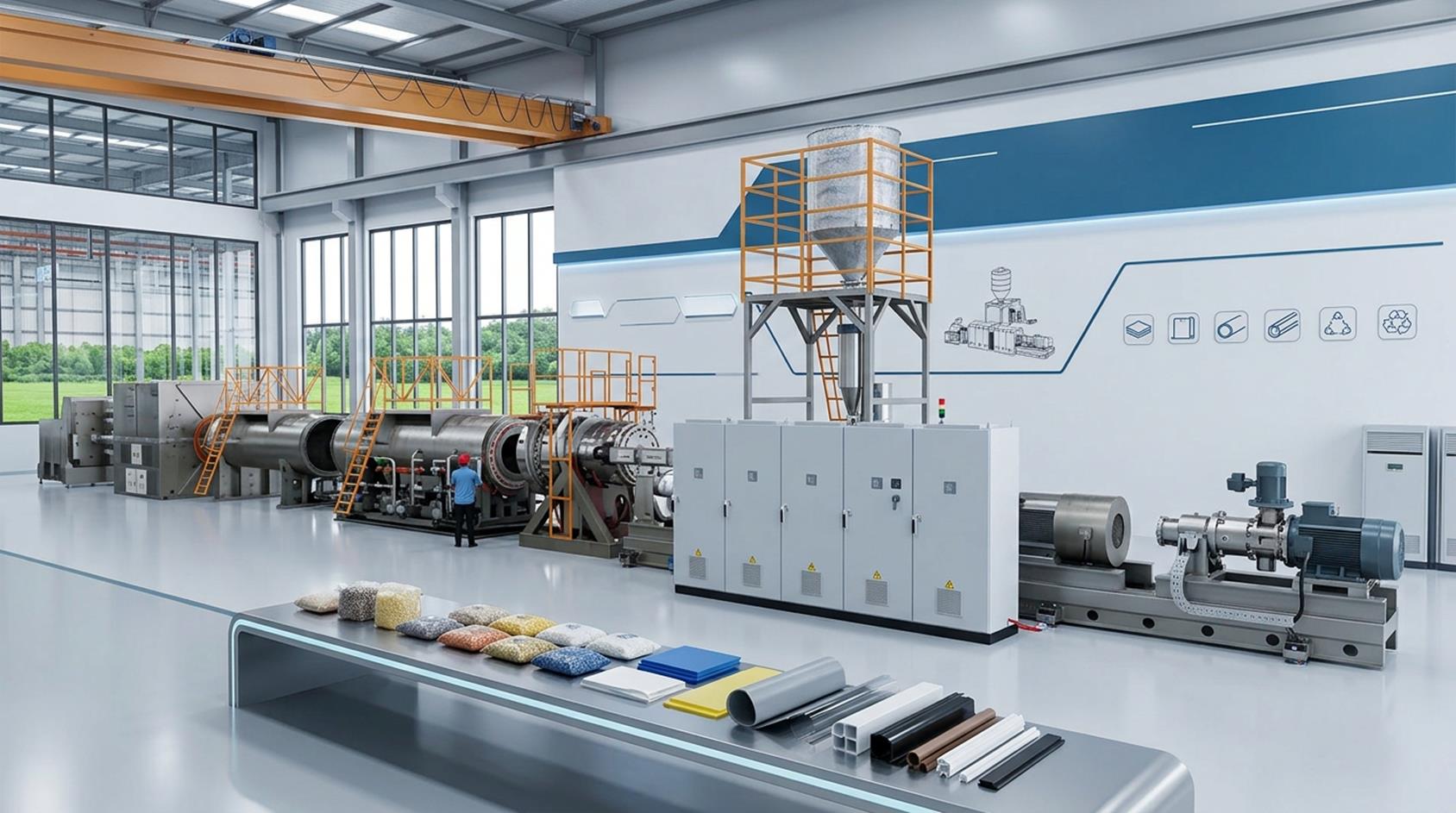
A plastic extrusion line combines the extruder, die and downstream equipment into one coordinated production system.
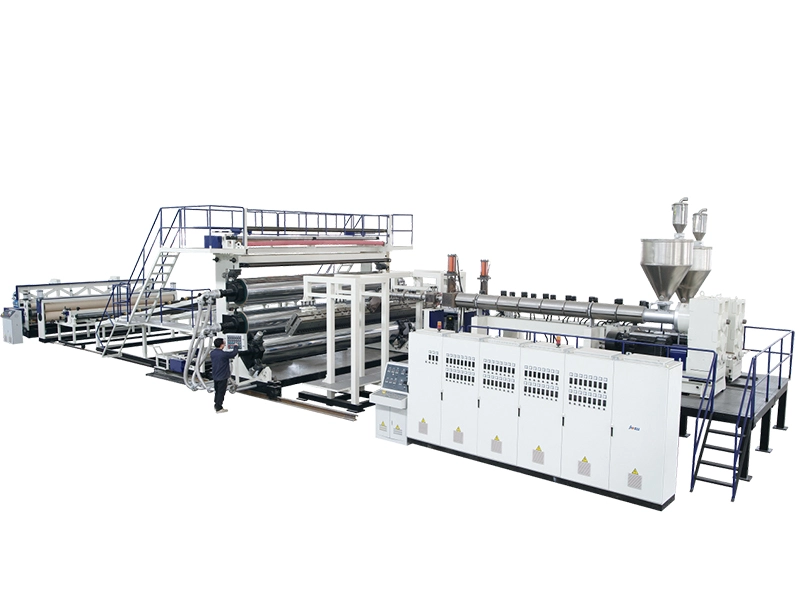
The exact configuration depends on the product. A basic line may contain a feeder, extruder, die, cooling system and haul-off, while high-output industrial lines can include melt filtration, automatic thickness control, edge trimming, winding, cutting and centralized process control.
| Product | Typical forming equipment | Key downstream equipment |
|---|
| Sheet | Flat die | Chill roll, cooling and cutting |
| Film | Film die | Cooling, winding and trimming |
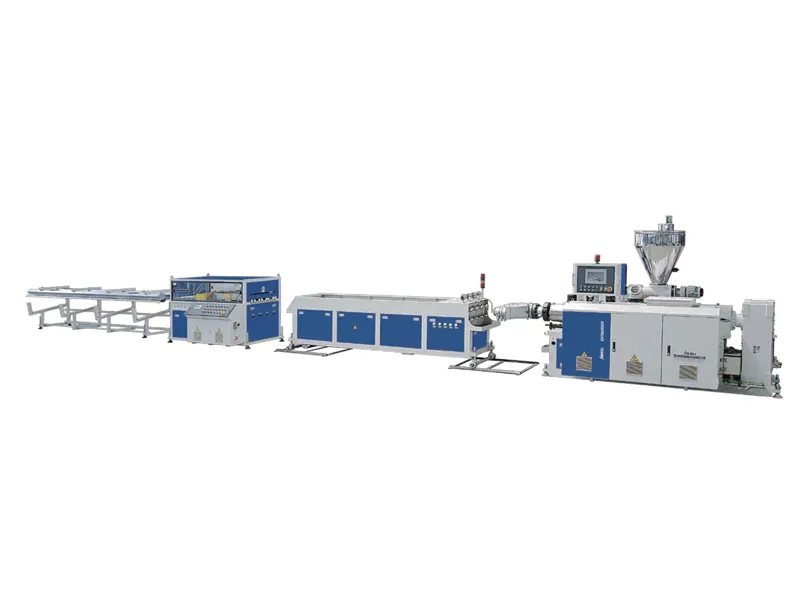
| Pipe | Pipe die | Vacuum calibration, cooling tank, haul-off and cutter |
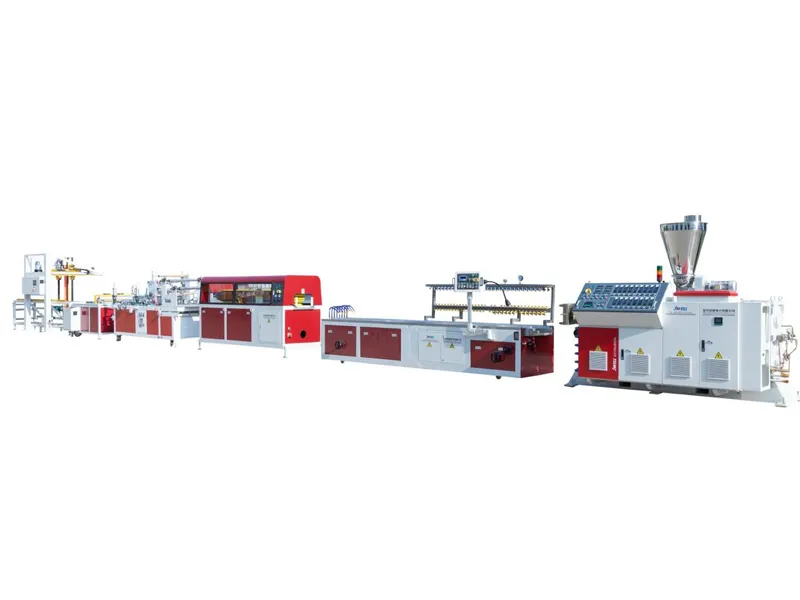
| Profile | Profile die | Calibration table, cooling, haul-off and cutter |
| Compounds | Twin-screw extruder | Pelletizing and cooling |
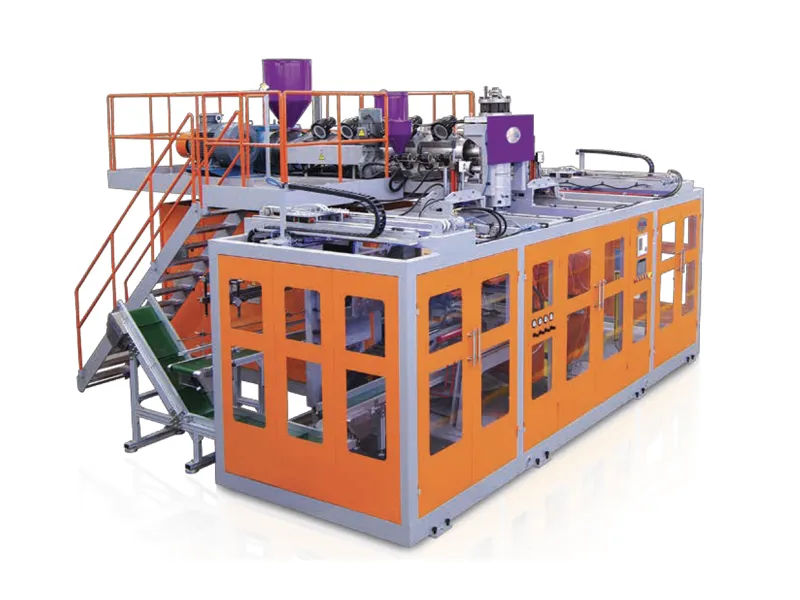
For manufacturers comparing equipment options, JWELL's plastic extrusion machinery for sale covers sheet/plate/film extrusion lines, profile systems, pipe extrusion lines, compounding machines, recycling equipment and other plastic-processing solutions.
For example, a profile production project may require a dedicated plastic profile extrusion line rather than a general-purpose extrusion system. The correct equipment depends on resin, product geometry, output and tolerance requirements.
What Factors Affect Plastic Extrusion Quality?
Plastic extrusion quality depends on the interaction between material properties, screw design, temperature, pressure, die geometry and downstream cooling.
Temperature is one of the first parameters to control. Excessive heat can cause thermal degradation in sensitive polymers, while insufficient heat can result in poor plasticization and unstable flow.
Screw speed also affects throughput, shear and residence time. Increasing speed can raise output, but the optimum value depends on the polymer, screw geometry and cooling capacity.
Die design is equally important. Poor melt distribution can create thickness variation, surface defects or dimensional instability. Downstream equipment must then cool and pull the product consistently enough to maintain its final dimensions.
For U.S. installations, electrical and machinery requirements should also be considered during equipment selection. UL Solutions' industrial machinery and systems guidance identifies NFPA 70, the National Electrical Code, and NFPA 79, the Electrical Standard for Industrial Machinery, among the standards relevant to industrial machinery in the United States.
This is particularly important when manufacturers are purchasing complete extrusion lines for installation in the U.S. Market requirements should be considered together with machine configuration, electrical components, safety systems and local compliance requirements rather than treated as an afterthought.
Manufacturers should therefore evaluate the complete production system rather than selecting an extruder based only on purchase price. NIST's supplier selection recommendations emphasize factors such as supplier capabilities, capacity and total cost of ownership when evaluating manufacturing suppliers.
For extrusion projects, this means comparing not only the initial equipment price but also expected production capacity, energy consumption, maintenance requirements, spare-parts availability, technical support and long-term operating costs.
How Do You Choose the Right Plastic Extrusion Equipment?
Choosing extrusion equipment should start with the final product rather than the extruder itself. Manufacturers should first define the polymer, product dimensions, required output, tolerance, surface requirements and production volume.
For example, a high-output pipe application may require a different screw configuration, die system, vacuum calibration unit and cooling capacity than a thin-sheet application. Similarly, compounding materials containing fillers or additives may require specialized screw elements and feeding systems.
Before requesting a quotation, manufacturers should consider:
Material: Resin type, viscosity, thermal stability and additives
Product: Shape, dimensions, thickness and dimensional tolerance
Output: Required kilograms per hour or line speed
Downstream process: Cooling, calibration, haul-off, cutting or winding
Automation: Thickness control, process monitoring and centralized control
After-sales support: Installation, commissioning, spare parts and technical assistance
Total cost: Equipment investment, energy consumption, maintenance and operating costs
A complete extrusion solution should therefore be selected according to the entire production process rather than a single machine specification.
Conclusion
Plastic extrusion works by continuously feeding, melting, mixing and pressurizing thermoplastic material before forcing it through a shaped die and cooling the resulting product. Although the basic principle is straightforward, consistent industrial production requires precise coordination between the extruder, screw, die, temperature-control system and downstream equipment.
JWELL supports a wide range of extrusion applications, from sheet and film to pipe, profile, compounding and recycling. With more than 3,000 employees, approximately 500 technical and management personnel, and more than 2,000 extrusion lines produced annually according to JWELL, the company provides equipment for manufacturers with different production requirements.
For manufacturers evaluating a new extrusion project, the most important step is to match the machine configuration with the material, product geometry, output target and quality requirements. A properly configured extrusion line can provide stable production, consistent dimensions and better long-term operating efficiency.
FAQ
1. How does plastic extrusion work?
Plastic extrusion works by feeding thermoplastic pellets into a heated barrel, where a rotating screw melts and conveys the material before forcing it through a die. The extrudate is then cooled, sized and cut or wound.
2. What is the first step in plastic extrusion?
The first step is feeding plastic resin into the extruder hopper. The screw then conveys the material into the heated barrel for melting and plasticization.
3. What materials can be used in plastic extrusion?
Common extrusion materials include PE, PP, PVC, PET, TPU, PS, PC, ABS and various engineering polymers. Processing conditions depend on the material's thermal and rheological properties.
4. What determines the shape of an extruded plastic product?
The extrusion die primarily determines the cross-sectional shape. Calibration, cooling and haul-off systems then help maintain the required dimensions.
5. What is the difference between an extruder and an extrusion line?
An extruder melts and conveys the polymer, while a complete extrusion line includes the extruder plus the die and downstream equipment needed to form, cool, size and finish the product.
6. How do I choose the right plastic extrusion machine?
Start with the material, product shape, dimensions, target output, tolerance and required automation level. Then compare screw design, die configuration, cooling, downstream equipment, energy consumption, technical support and total cost of ownership.
References
https://www.twi-global.com/technical-knowledge/faqs/plastic-extrusion
https://www.ul.com/services/industrial-machinery-and-systems-services
https://www.nist.gov/blogs/manufacturing-innovation-blog/8-ways-improve-your-supplier-selection-process
 English