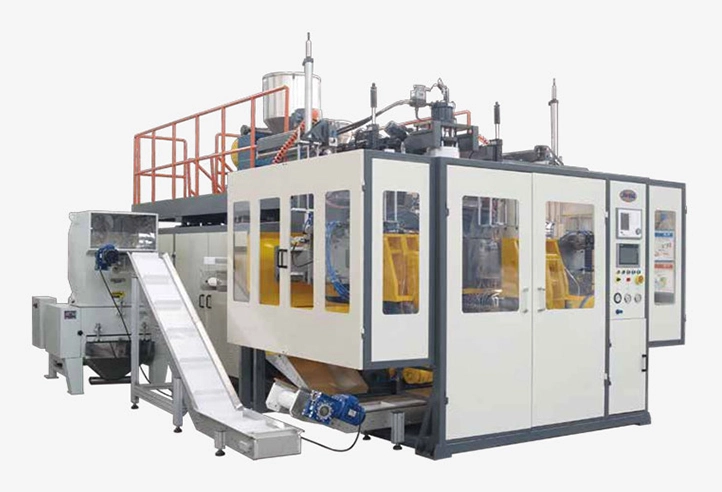
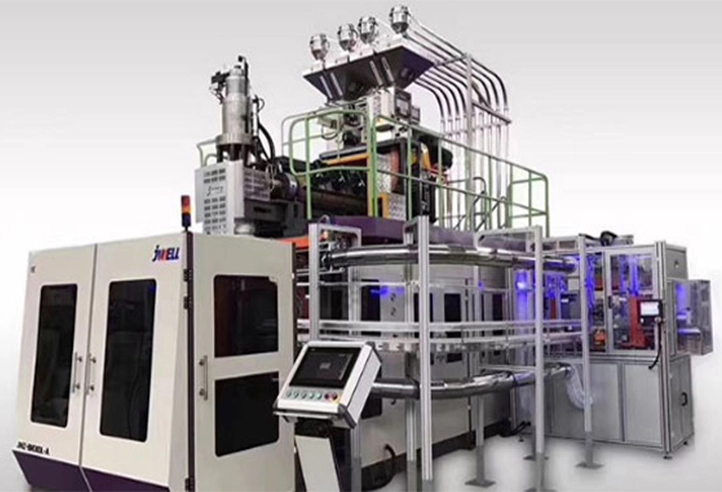
The plastic extrusion process is a continuous manufacturing method that melts thermoplastic resin and forces it through a die to produce products with a consistent cross-sectional shape. It is widely used for pipes, profiles, sheets, films, pellets and other plastic products.
A typical extrusion line integrates material feeding, plasticizing, melt filtration, die forming and downstream cooling or sizing. According to the TWI guide to the plastic extrusion process, the screw conveys polymer through a heated barrel, while compression and shear generate additional heat before the filtered melt enters the die.
For manufacturers, understanding the complete process is essential because product quality depends not only on the plastic extruder, but also on screw design, die geometry, temperature control and downstream equipment.
What Is the Plastic Extrusion Process?
The plastic extrusion process is a continuous process in which thermoplastic material is melted, mixed, pressurized and shaped through a die before being cooled and finished.
The process normally begins with polymer pellets or granules. Depending on the application, the material may be virgin resin, recycled material, additives, fillers or a formulated compound.
The basic workflow is:
Feeding → Conveying → Melting & Plasticizing → Mixing → Filtration → Die Forming → Cooling & Calibration → Haul-Off → Cutting/Winding
Modern extruders commonly use multiple temperature-control zones. TWI notes that extrusion barrels can use three or more independent PID controllers, allowing temperature to increase progressively along the barrel. This type of staged temperature control helps maintain appropriate plasticization conditions as the material moves toward the die.
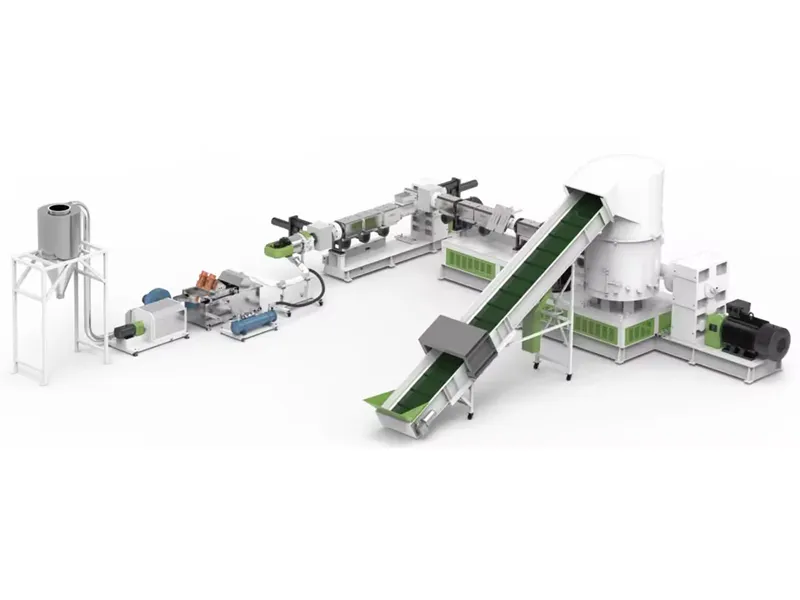
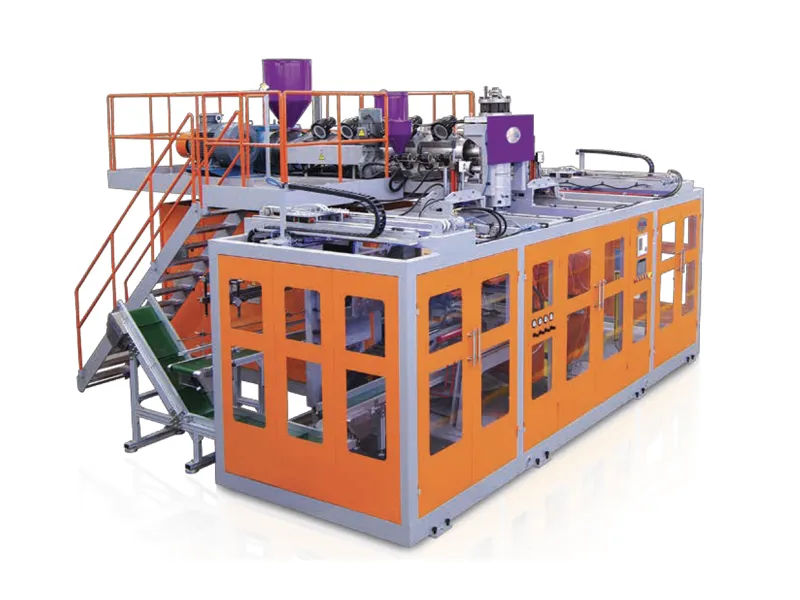
For manufacturers planning a new line, the equipment configuration should be selected according to resin type, output, product dimensions and required tolerance. JWELL provides a broad range of plastic extrusion machinery for sheet, film, pipe, profile, compounding and recycling applications.

How Does the Plastic Extrusion Process Work Step by Step?
The step-by-step extrusion process converts solid polymer pellets into a continuous finished product through controlled heating, conveying, forming and cooling.
1. Feeding the Raw Material
Plastic pellets enter the hopper and move into the feed throat. Accurate feeding is important because unstable feed rates can cause fluctuations in melt pressure, output and product thickness.
2. Conveying and Plasticizing
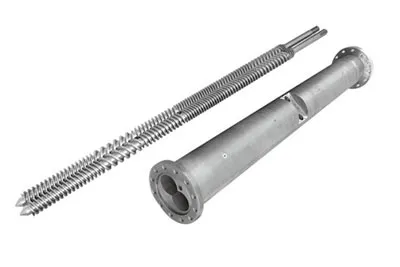
The rotating screw transports the material through the heated barrel. As the polymer moves forward, barrel heating combines with compression and shear to transform the solid pellets into a homogeneous melt.
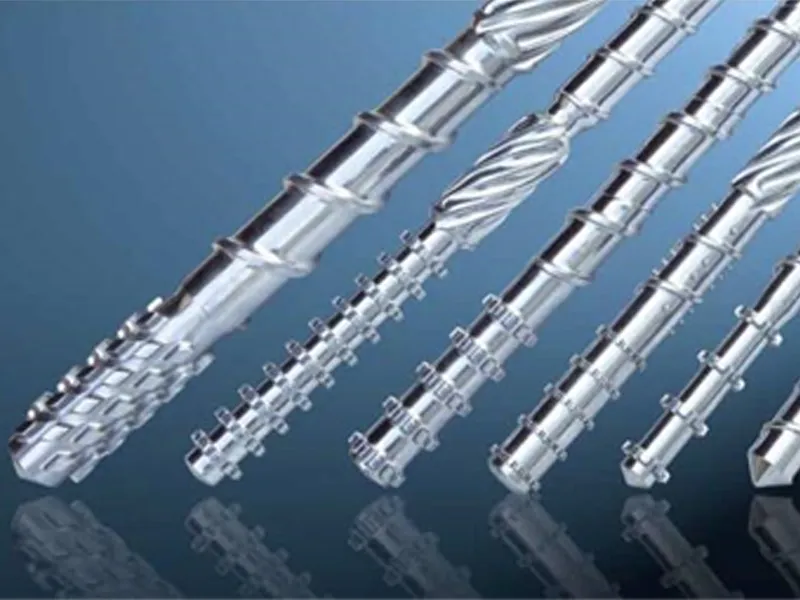
Screw geometry is critical. Different materials require different screw designs because melting behavior, viscosity and sensitivity to shear vary significantly.
3. Mixing and Melt Filtration
Once melted, the polymer must be mixed uniformly. Additives, pigments or fillers need proper dispersion to maintain consistent product properties.
Before forming, the melt may pass through a screen pack and breaker plate to remove contaminants and improve melt uniformity. As explained in TWI's plastic extrusion process guide, filtration is an important stage before the melt reaches the die.
4. Die Forming
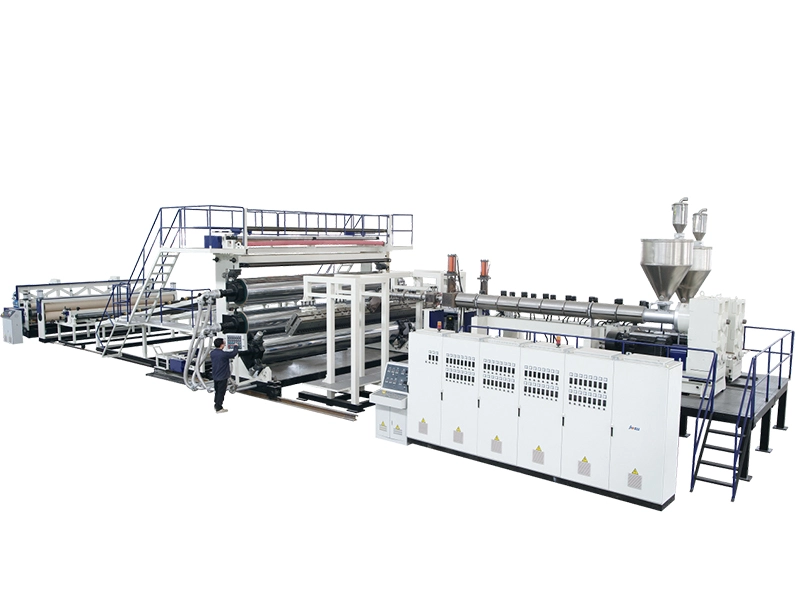
The die determines the cross-sectional geometry of the final product. A flat die can produce sheets or films, while specialized dies are used for pipes, tubing and profiles.
This is why die design must be matched to the material and product specification rather than treated as a standard component.
5. Cooling and Calibration
After leaving the die, the hot extrudate must be cooled and stabilized. Pipes and profiles may use vacuum calibration and water cooling, while sheet and film lines can use cooling rolls.
Cooling must be uniform. Excessive or uneven cooling can contribute to dimensional variation, warpage or internal stress.
6. Haul-Off and Cutting
A haul-off unit continuously pulls the product at a controlled speed. The finished product may then be cut into fixed lengths, wound into rolls or transferred to another downstream process.
This continuous workflow is one of the main advantages of extrusion for high-volume manufacturing.
Key Parameters That Affect Plastic Extrusion Quality
Extrusion quality depends on coordinated control of material, temperature, screw speed, pressure, die conditions and downstream cooling rather than on a single machine setting.
| Parameter | Main Function | Typical Quality Risk |
|---|
| Material moisture | Controls melt stability | Bubbles, degradation |
| Barrel temperature | Controls plasticization | Poor melting or degradation |
| Screw speed | Controls conveying and output | Surging, overheating |
| Melt pressure | Indicates process stability | Dimension fluctuations |
| Die temperature | Controls melt flow | Surface defects |
| Cooling rate | Stabilizes dimensions | Warpage, residual stress |
| Haul-off speed | Controls final dimensions | Thickness variation |
The correct settings vary considerably by polymer and product. For example, ISO 16790:2021 addresses the drawing characteristics of thermoplastics in the molten state under defined extrusion temperature and drawing conditions. Understanding how a polymer behaves while molten is therefore important when establishing processing conditions and evaluating dimensional performance.
Energy efficiency is another important consideration. In addition to process stability, the drive system used to operate the screw can influence the overall energy consumption of an extrusion line. WEG's discussion of energy-efficient extruder solutions explains how high-efficiency permanent-magnet motor and drive technologies can reduce electrical energy consumption in applicable extruder installations.
For high-output production, manufacturers should therefore evaluate not only maximum capacity but also melt stability, energy consumption, scrap rate and long-term maintenance.
Which Extrusion Equipment Is Right for Your Product?
The appropriate extrusion equipment depends primarily on the product geometry, polymer, output requirement and downstream finishing method.
| Product | Recommended Equipment | Typical Downstream |
|---|
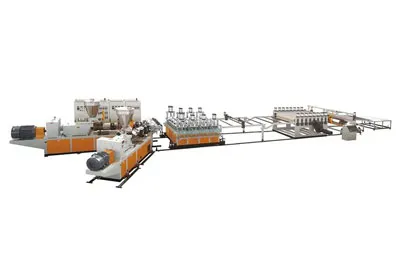
| Sheet & plate | Sheet extrusion line | Roll cooling, trimming, cutting |
| Film | Film extrusion line | Cooling, winding |
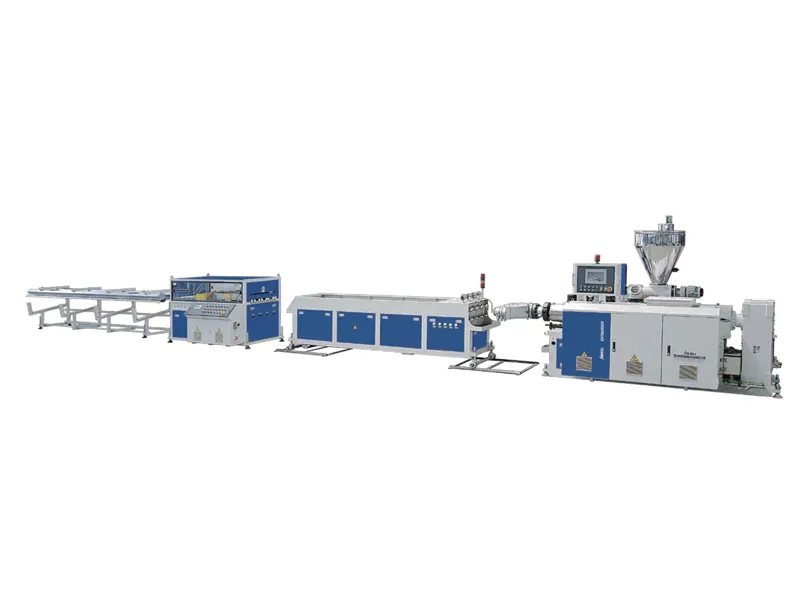
| Pipe | Pipe extrusion line | Vacuum sizing, cooling, haul-off |
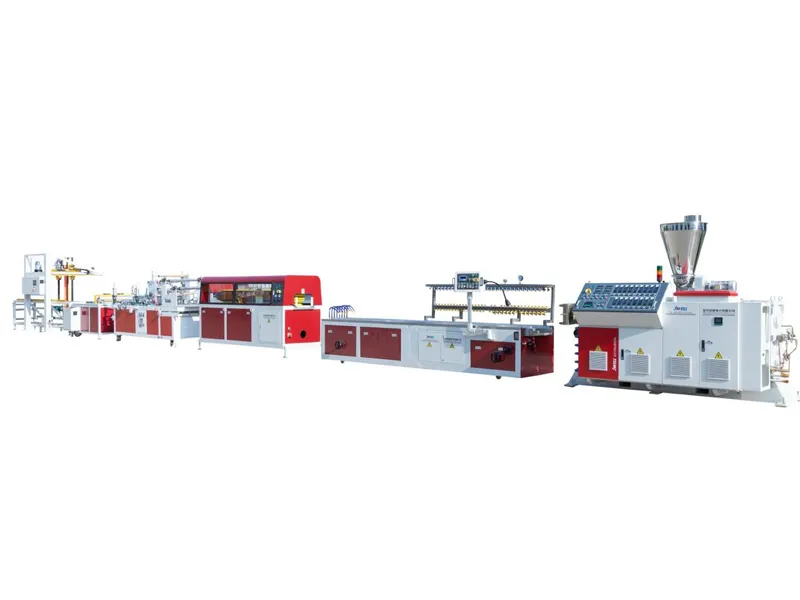
| Profile | Profile extrusion line | Calibration, cooling, cutting |
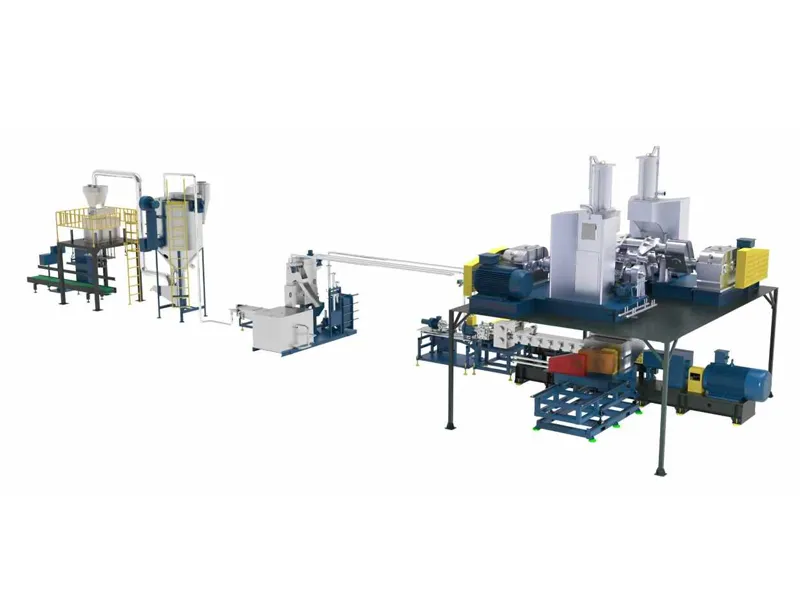
| Compounds | Twin-screw compounding machine | Pelletizing |
| Recycled pellets | Recycling & pelletizing line | Filtration, pelletizing |
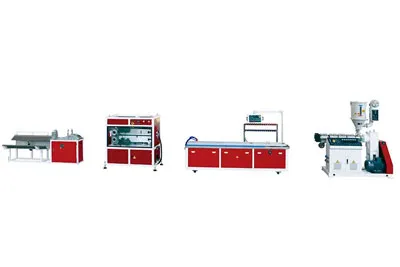
For manufacturers producing complex profiles, a dedicated plastic profile extrusion machine can integrate extrusion, calibration, cooling, haul-off and cutting into one production system.
For pipe manufacturers, plastic pipe extrusion machine solutions are designed around pipe diameter, material and cooling requirements.
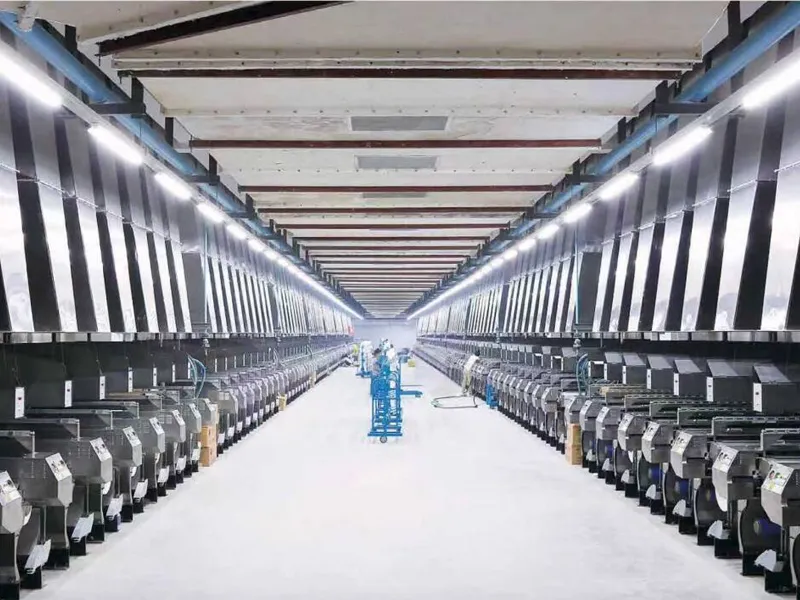
JWELL also provides a wide range of extrusion technologies and states that its global manufacturing network includes more than 3,000 employees, approximately 500 technical engineers and management personnel, and production of more than 2,000 advanced extrusion lines annually.
For buyers comparing complete systems, plastic extrusion machinery can be evaluated according to product application, line configuration, automation, energy efficiency and after-sales requirements.
Conclusion
The plastic extrusion process is a coordinated sequence of feeding, melting, mixing, filtration, die forming, cooling and finishing that transforms thermoplastic resin into continuous products.
The most important lesson is that extrusion performance depends on the complete line rather than the extruder alone. Correct material preparation, screw design, temperature control, die configuration and downstream calibration are essential for stable production.
For manufacturers planning a new extrusion project, JWELL can provide solutions across sheet, film, pipe, profile, compounding and recycling applications. Selecting equipment according to actual resin, output and product requirements can improve consistency, reduce scrap and support long-term production efficiency.
FAQ
1. What is the plastic extrusion process?
The plastic extrusion process is a continuous manufacturing method that melts thermoplastic resin and forces it through a die to create a product with a consistent cross-sectional shape.
2. What are the main steps in plastic extrusion?
The main steps are feeding, conveying, melting, mixing, filtration, die forming, cooling, calibration, haul-off and cutting or winding.
3. What does a plastic extruder do?
A plastic extruder conveys and plasticizes polymer, develops melt pressure and delivers homogeneous material to the extrusion die.
4. What factors affect extrusion quality?
Material moisture, temperature, screw speed, melt pressure, die conditions, cooling rate and haul-off speed all influence extrusion quality.
5. What is the difference between an extrusion line and an extruder?
An extruder is the core machine that melts and conveys polymer, while a complete extrusion line also includes feeding, die, cooling, calibration, haul-off and cutting or winding equipment.
6. How can manufacturers improve extrusion efficiency?
Manufacturers can improve efficiency through optimized screw and die design, stable temperature control, efficient motors and drives, automated monitoring, reduced scrap and appropriate downstream cooling.
References
https://www.twi-global.com/technical-knowledge/faqs/plastic-extrusion
https://www.iso.org/standard/80004.html
https://www.weg.net/institutional/CF/en/solutions/energy-efficiency/industrial-applications/extruder
 English